"I thought I was teaching math well."
Students could solve 49 × 86. They could work through 1,937 ÷ 4. They followed the steps and got correct answers.
But ask them to solve 78 + 99 mentally? They stacked the algorithm. Ask them to reason about 35 × 18? They searched for steps they couldn't quite recall.
The work looked polished. The scores looked strong. The reasoning underneath was fragile.
If that tension feels familiar, you're not alone — and you're in the right place.
What You'll Learn on March 25
Pam will unpack:
✔ Why students can execute procedures yet struggle to reason flexibly
✔ The critical shift from additive to multiplicative thinking
✔ What a powerful Problem String looks like in Grades 3–5
✔ Strategic models that build durable mathematical understanding
✔ How to reduce algorithm dependence without creating confusion
✔ What it actually takes to develop reasoning over time, not just in one lesson
You'll leave with clarity, practical insight, and concrete next steps.
Who This Is For
This session is designed for anyone working to strengthen mathematical reasoning in classrooms or across a district:
✔ Grades 3–5 Classroom Teachers
✔ Math Coaches
✔ Curriculum Directors
✔ Instructional Leaders
✔ PLC Teams seeking shared language and alignment
If students in your world are following steps without understanding them, this conversation is for you.
Save Your Place
The Book Behind This Session
This webinar celebrates the release of:
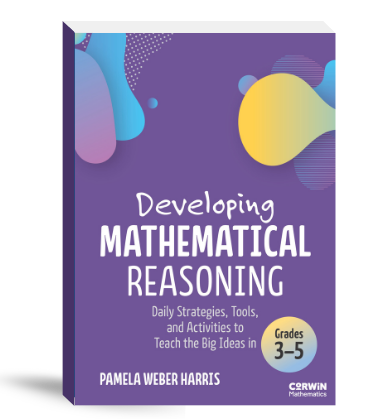
Developing Mathematical Reasoning: The Strategies, Models, and Lessons to Teach the Big Ideas in Grades 3–5
The companion volume to Developing Mathematical Reasoning: Avoiding the Trap of Algorithms, this new book provides the practical structures, strategies, models, and lesson routines, that help educators move from procedural instruction toward genuine reasoning.
During the webinar, Pam will show exactly how this work comes to life in real classrooms.
Preorder the Book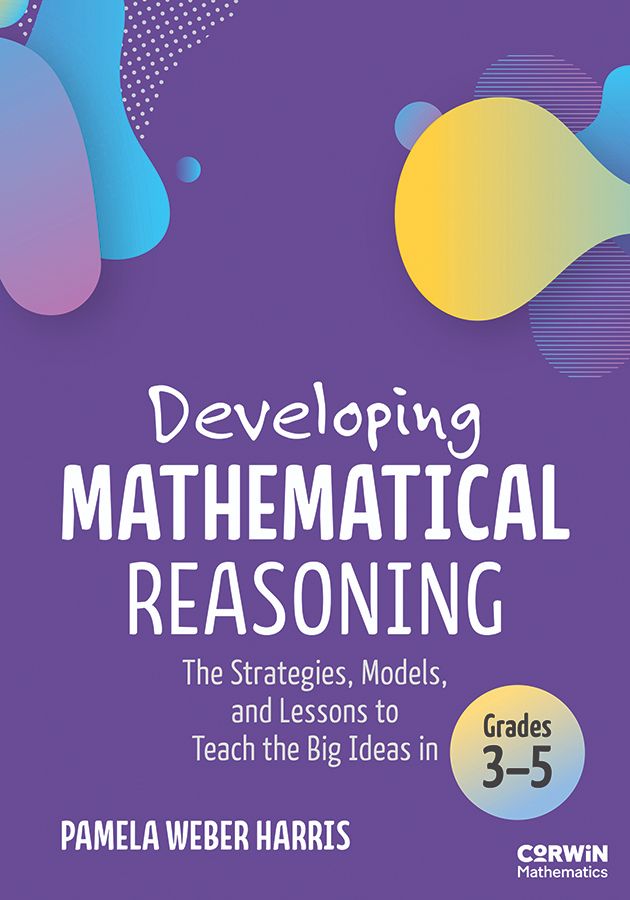
What Makes This Session Different
This is not a theory lecture. It is not a critique of teachers. It is not one more thing to add to an already full plate.

What multiplicative reasoning is, and how to build it

What mathematical reasoning actually looks like in Grades 3–5

How instructional routines build connected, lasting understanding

How to align classroom practice with how mathematicians actually think
Expect concrete examples. Expect live modeling. Expect to leave with something you can use.
"I Only Thought I Knew How to Teach Math Well"
Susan Smith taught fourth grade for 34 years. Her students scored well on state tests, executed procedures correctly, and checked every box.
Then she asked them to solve 78+99 mentally. They were completely stuck.
Her story of discovering the gap between polished answers and real reasoning, and what she did about it, is one of the most honest accounts of this shift we've seen from a classroom teacher.
Read Susan's full story
For many teachers, that moment of realization sounds something like this:
I’m not sure why they don’t "get it".
I have explained how to solve all the problems and we have practiced, but they keep mixing up what to do when. What we are doing works for a while, but when we move on, they seem to forget what we have just done and aren’t making the connections I wish that they were.
I’m working hard and trying everything I can think of but it’s just not working. I know there has to be something I am missing.
If it feels like your effort and hard work aren’t getting the results you want for your students, you have found what you need here.
Register for the webinarVoices from experts in the field

Jo Boaler
NOMELLINI & OLIVIER PROFESSOR OF EDUCATION, STANFORD UNIVERSITYSTANFORD, CA
“What happens when you shift math from being about rote memorizing and mimicking to focusing on strategies, thinking, and reasoning? There is no one better than Pam Harris to guide you in this important path—and this one is for you, grade 3–5 teachers!”

Peter Liljedahl
PROFESSOR, SIMON FRASER UNIVERSITY; AUTHOR, BUILDING THINKING CLASSROOMS, VANCOUVER, BRITISH COLUMBIA, CANADA
“In this book, Pam Harris continues her quest to make math figure-outable-this time for grade 3-5 teachers. Through real classroom examples, Harris teaches us how addition, subtraction, multiplication, and division strategies should be experienced and understood, and she gives us the tools o teach these central ideas in mathematics.”
Jennifer M. Bay-Williams
PROFESSOR, UNIVERSITY OF LOUISVILLE, PEWEE VALLEY, KY
“Through extensive use of representations and illustrations, Pam Harris effectively illustrates how to develop reasoning strategies developmentally across the operations. Smudge problems and number strings appearing throughout the book provide enriching ideas for how to help students make sense of strategies and become reasoners. An excellent, practical resource for developing computational fluency.”

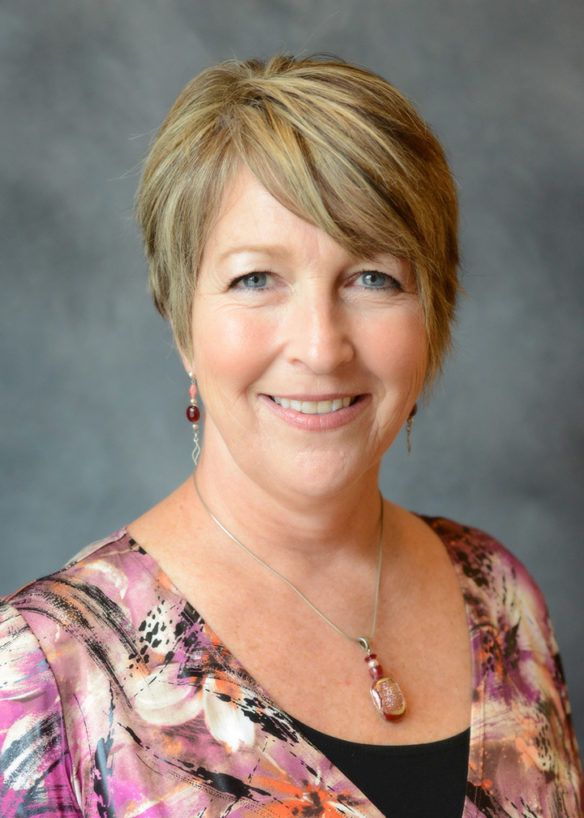
Pam Harris
Author
Pam Harris, author of Developing Mathematical Reasoning: Avoiding the Trap of Algorithms, is shifting the way we view and teach mathematics. She is a mom, former high school math teacher, university lecturer, author, and the Founder of Math is FigureOutAble.
Math teachers around the world rave about her online Building Powerful Mathematics workshops. For over 20 years, Pam has been helping leaders and teachers reach more students in less time so that students math with confidence and success.
Pam's Full Body of Work
Pam's work spans K–12 and has helped thousands of educators move beyond procedures toward genuine mathematical reasoning. Her books include:
Developing Mathematical Reasoning: Avoiding the Trap of Algorithms, the foundational K–12 text behind this webinar's core ideas.
The Numeracy Problem String Series (Kindergarten–Fifth Grade), grade-by-grade volumes of ready-to-use classroom routines that build number sense and relational thinking.
Building Powerful Numeracy for Middle and High School Students, its companion Lessons and Activities volume, and the Algebra and Advanced Algebra Problem Strings, bringing the same reasoning-first approach to secondary classrooms.
Explore all of Pam's books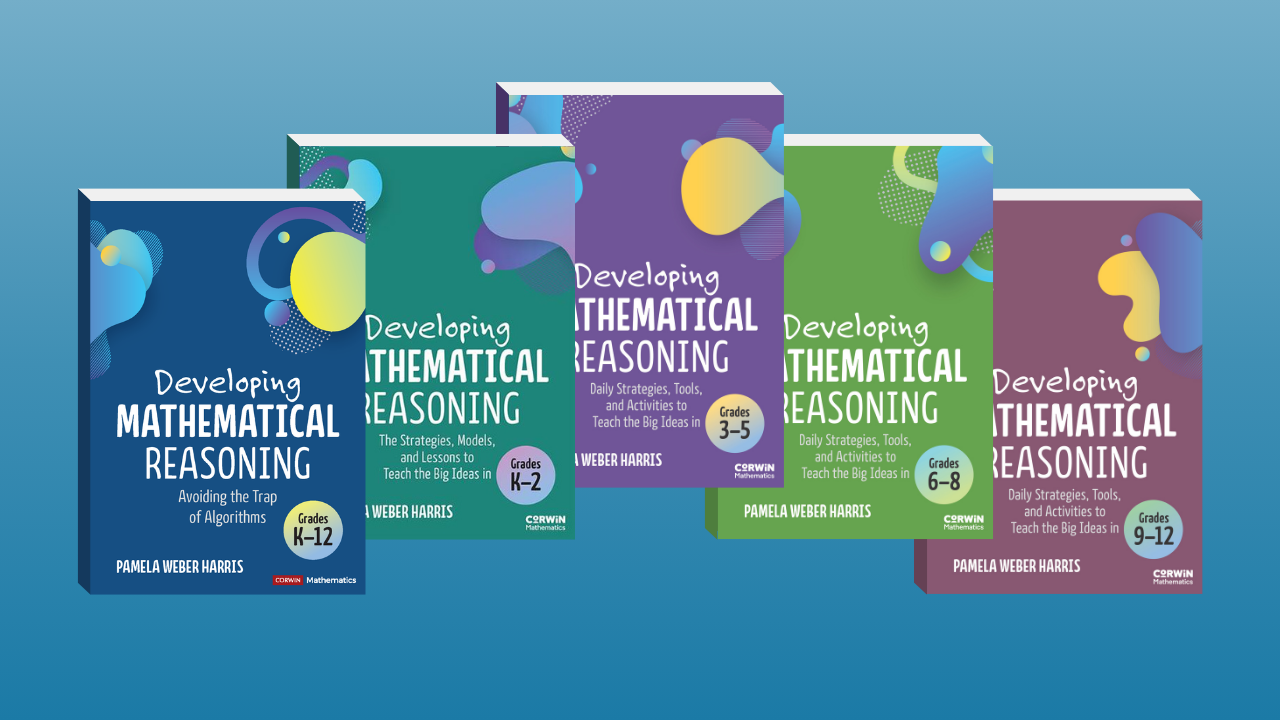
Save Your Seat
March 25, 8:00 PM ET | 7:00 PM CT | 6:00 PM MT | 5:00 PM PT
Free to attend. Registration required.
Bring your PLC. Bring your leadership team. Bring your questions.
Let's build reasoning that lasts.