A Story of Hope: How We Made Math (and Growth) FigureOutAble Together
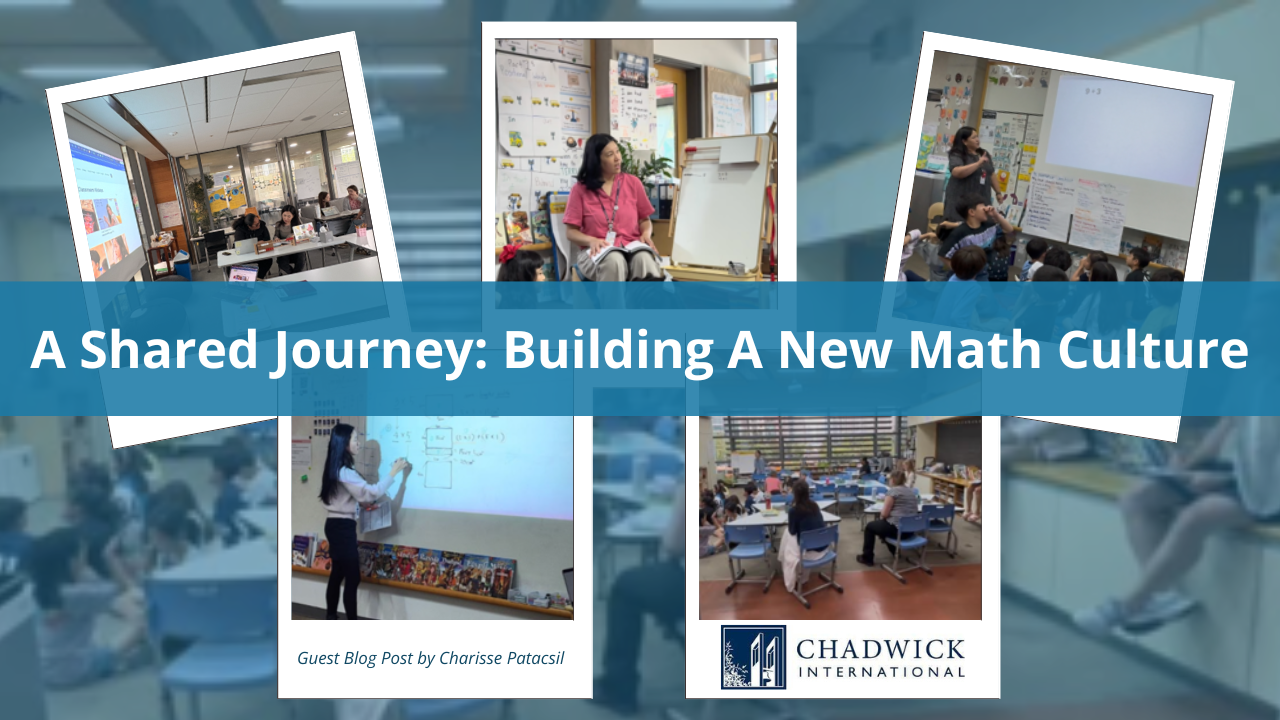
Guest Post by Charisse Patacsil, Math Coach at Chadwick International
At Chadwick International, Charisse Patacsil has spent the last several years leading a schoolwide journey to transform mathematics teaching and learning. Rather than relying on one-time professional development, she helped create a culture where teachers learn, collaborate, and grow together alongside their students. Charisse put into practice the principles of the Results Pyramid (Ep. 321), which starts with quality, shared experiences that build beliefs, which then inform and inspire actions that ultimately lead to successful results.
It all started with a simple but daunting, "What if."
For years, our school’s goal was to improve our math program. We poured resources into math initiatives—buying new tools, hiring consultants, and sending teachers to one-off workshops. But something was missing. The growth wasn’t sustainable, and as a math coach, I found it difficult to track our progress.
That’s when it hit me: Maybe, instead of viewing growth as an individual initiative, I needed to see it as a collective effort. What if, instead of coaching individuals, we coached whole teams? Might it then be possible to coach the entire Village School (grades PreK-5)? How could we impact more teachers so that, ultimately, we could impact more kids? The scale of it felt impossible at the time, but I had to hold onto hope.
I shared this idea as a vision with my principal and our teachers: What if we grow alongside our students? If we want to see mathematical growth in our kids, shouldn't it start with us? We committed to learning. But, how?
I first took Pam Harris’s asynchronous mathematics workshops during the pandemic. Experiencing those lessons completely changed how I understood math content and how I wanted to teach it. If only I could help others experience what I experienced when I first met Pam! I knew we had to include Pam in our school’s learning journey.
Here is how we made it happen, year by year.
Year 1: Building a Common Language
We started by laying a shared foundation. With our vision in mind, we dedicated formal professional development time and grade-level team meetings to taking Pam’s workshops together. Suddenly, teachers had a common ground and a common language for talking about math. Finally, we knew what strategies and models really were!
In our meetings, we didn't just talk about the modules—we lived them. We practiced the Problem Strings together. In the beginning, I modeled facilitation, learning right alongside the teachers. Together, we practiced asking questions that promote deep thinking, identified the underlying math structures, and anticipated student strategies. By the time Pam arrived at our school for her two-day workshop, we weren't starting from scratch. We were ready.
Year 2: Keeping the Momentum & Gathering Data
The challenge of Year 2 was maintaining that initial excitement. To keep the momentum going, we continued turning our collaboration meetings into active coaching labs. We watched Math is FigureOutAble Journey videos and role-played Problem Strings, taking turns as facilitator and students. We also revisited parts of the asynchronous workshops based on the unit of study that each grade level was learning, trying math contexts together and studying what a math congress might look like.
As we used materials in our meetings, some teachers brought the Problem Strings books into their classrooms, took photos of their boards, and even recorded lessons for feedback. These actions were a genuine response to the invitation to continue learning and growing. Our collaboration meetings became a brave, yet safe, space for learning—trying new ideas, asking questions, making mistakes, and even laughing together. Learning was joyful. Math-ing was joyful.
Pam’s live visit became the ultimate consolidation of this learning. During her lab lessons, we witnessed firsthand how our students reasoned and learned with her. We got to see what was truly possible—not just in our math classes, but in our students and what they are capable of. We engaged in thoughtful conversations and were left with even more "what if's" and possibilities moving forward. Year 2 became even more special when we extended this journey to our Middle School colleagues and their students, learning and growing together as mathematicians.
As a coach, my personal milestone this year was shifting to data. I wanted to capture the true impact on our students. I started filming students’ thinking, collecting math journals, and interviewing kids. We are still in the early stages of data collection, but seeing the shift in how kids explain their reasoning shows us that the hope we started with is real.
Year 3: The Next Frontier (Labsites)
As we look ahead to the school year, we are asking a new question: Can we actually coach each other in real-time?
Our next big experiment is building labsites. We want to create the time and space for teachers to step into each other's classrooms, watch a live Problem String in action, and reflect on it together. We want "math-ing together" to be the permanent culture of our school, moving far beyond curriculum coverage to true, collaborative learning.
I am incredibly grateful that our math story is still ongoing, and that we are writing it together as a school. I am thankful for my fellow coaches and for our administrators' support, for always encouraging us to ask more “what if” questions and remain hopeful for our students. Pam, thank you for encouraging us to tell our story, for sharing who we are and what we do, and for teaching us that math truly is figure-out-able. We couldn't be more grateful to be learning and growing with you!
Takeaways for Coaches and Leaders
- Shift from "Compliance" to "Co-Playing": Joy in professional development comes from playing the game together. Instead of a lecture, turn meetings into a rehearsal studio. Take turns role-playing—let one teacher facilitate while the team acts like actual students. Laughing through the messy parts together makes trying it with real kids much less intimidating. "Telling" teachers the actions they need to to take does not inspire or sustain true change. Experience is what shifts beliefs that then inform actions and lead to lasting, desired results.
- Go First (Model Vulnerability): Pam teaches us to never stop starting. As leaders, we have to be the first ones willing to learn and try new things. Step up to the board and model a Problem String yourself while the teacher observes. Deliberately think out loud when a student gives an unexpected answer so teachers can see how you process a mathematical pivot in real-time.
- Embed PD into the School Day: Sustainable growth can't be an "add-on" to an already exhausting schedule. We explicitly repurposed existing grade-level collaboration meetings and dedicated specific school-day PD blocks to watching the videos and planning together. If it matters to the school, it should happen on the school's clock.
- Normalize "De-Privatizing" the Classroom: Traditional school culture keeps doors closed. Build comfort by creating a low-stakes, shared space where teachers can simply drop a quick photo of their chalkboard at the end of a math lesson. Seeing a colleague's anchor chart or a cool student strategy on a board builds curiosity and naturally paves the way for live labsites.
- Focus Data on "Thinking," Not Just Scores: Redefine what counts as data in your school. Instead of just looking at spreadsheets of standardized percentages, pull out your phone during a lesson and record a 45-second clip of a student explaining their strategy for a Problem String. Share these quick audio or video snippets at the start of your next staff meeting. It’s an instant booster of momentum.
Submitted by Charisse Patacsil, Math Coach, Chadwick International
Photos/videos from our collaboration meetings, teachers’ boards shared, coach & teachers trying Problem Strings in classes:
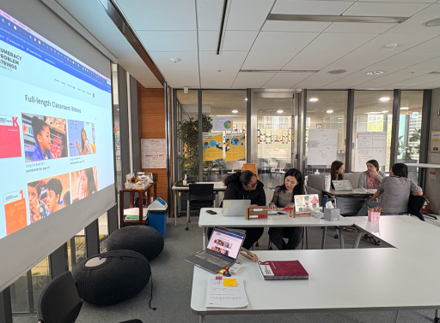
Video link HERE
Video link HERE
Teacher’s Reflections: Year 2 reflections/messages to Pam here
“This workshop and inquiry process have dramatically impacted my thinking and beliefs about myself as a mathematician and math teacher. Pam Harris specifically has inspired me, but also given me tangible, actionable moves to immediately use in the classroom that help me develop my confidence as a teacher of math, and of my students' attitudes and approaches to math. I am trying to incorporate her language and student question methods into the classroom already to improve students’ experiences. I greatly appreciated this workshop and the way Charisse set it up to facilitate teachers being able to attend more than one learning session. This was the most powerful and applicable math PD that I have had in my career (10+ years).” - April, Grade 3
“From watching her teach and guide us and the students, I would say that everyone can do math! Especially finding connections through Problem Strings was very interesting. Although it was difficult for me to follow at a fast pace, I understood in the long run. My brain is so used to algorithms, and seeing these strategies through her eyes was pretty fascinating and exciting to me as a teacher. I look forward to practicing myself and getting to encourage my kids that they can do math too. Pam Harris said something that stuck with me, and that is "it's not about being fast, it's about how much you can process and understand the equation so you are actually mathing". Not her exact words, but it stuck with me.” - Emerald, Grade 4
“I am consistently energized by my work with you (Pam), both through the online learning and in-person sessions. Since studying with you the past several years, I have shifted the way I understand math and the way I teach it. Now that I am more familiar with playing around with the relationships between numbers with my students: My "aha" moments now have to do with refining my understanding or delivery with small moves and trying to be intentional about building relationships or buy in. I will also be working towards doing more Problem Strings and following up with student work that helps students build/practice the understanding from the Problem String. (Hope this makes sense!) - Jenn Gray, Grade 2
“My biggest "aha" moment that I gained from Pam Harris is the importance behind the quiet thumb. I had never really thought about the implications behind a student waving their hand in front of others and how that could cause another student to feel like there is no reason to try to answer a question because they weren't the fastest. I think being at an international school adds more context as many of the students need extra time not to just think about the problem, but to also translate it and comprehend what we are asking them to do first.” - Amelia, Grade 2
“It is so powerful when you can embed storytelling in Math. I was inspired watching you help students think flexibly about numbers through a story. This helped me think of ways to integrate Math into Unit of Inquiry. Thank you so much, Pam!” - YoungNae, Kinder
“I was amazed by how well she did with having students share their learning. I feel as though that is the one thing that often gets lost or forgotten when teaching math, but it is so important and I liked the way she prioritized that. I was also impressed with the way she let the students guide the discussion while also making sure to reach the objectives.” - Kinsale, Kinder
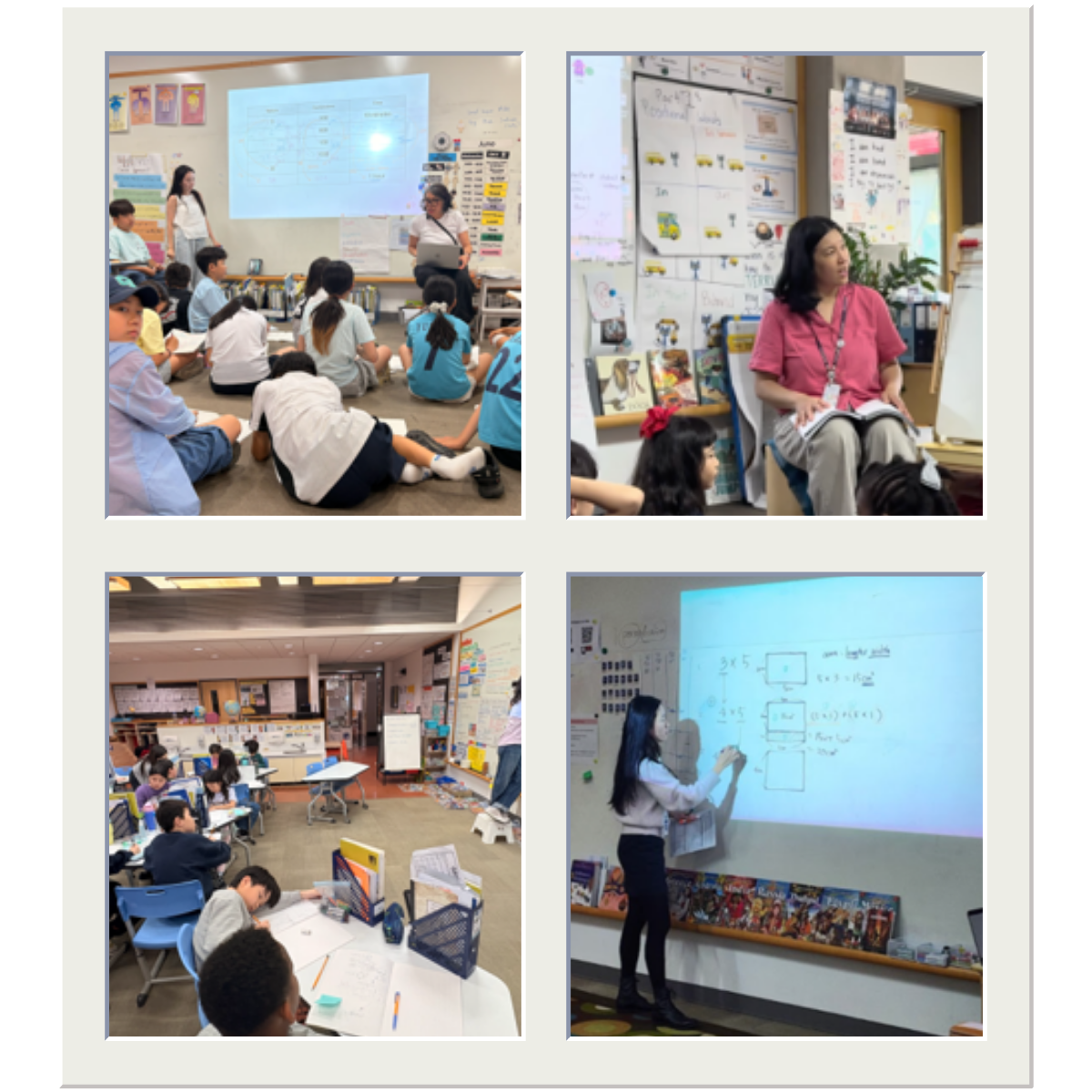
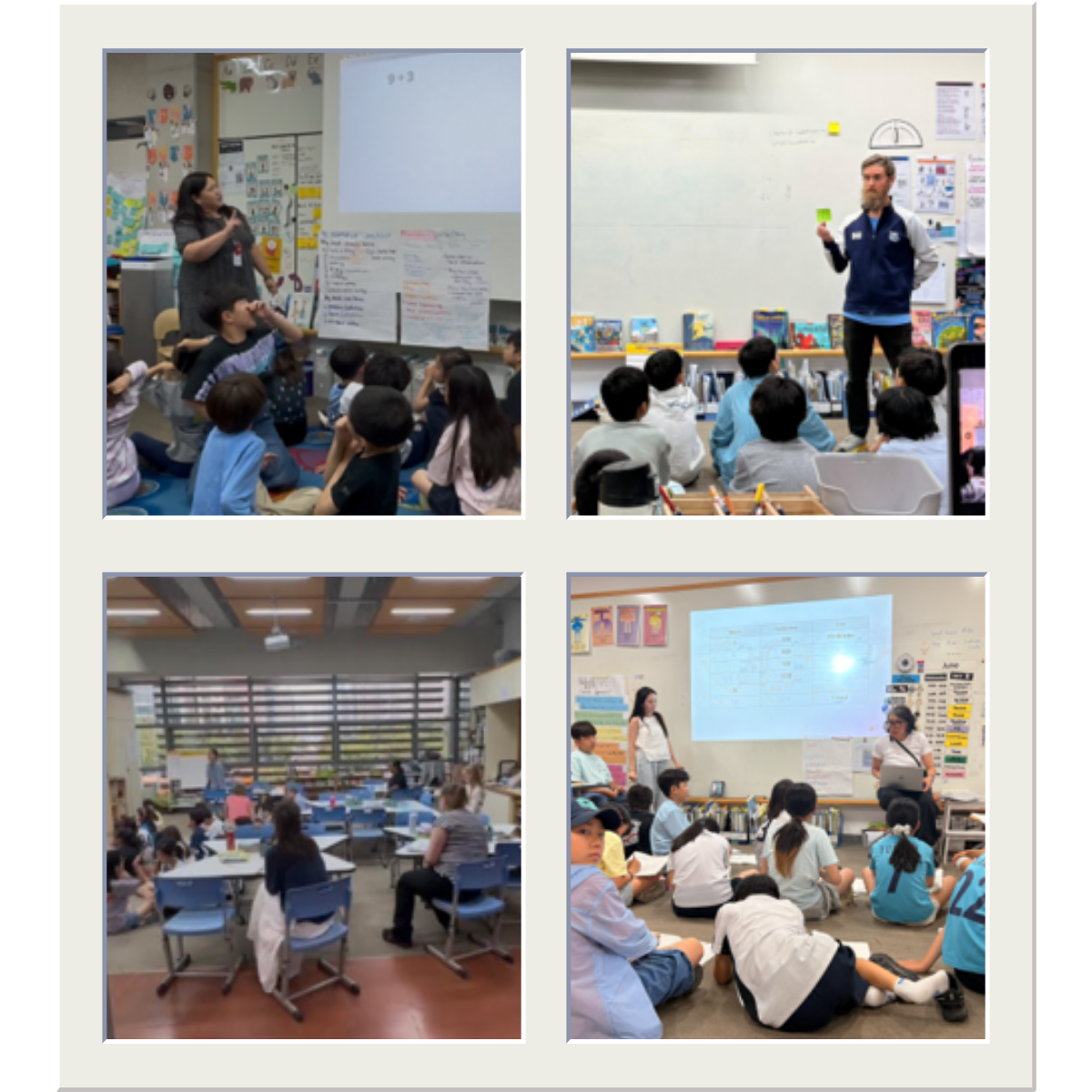
Grade 3 labsite to watch a chosen Pam H. Problem String done in class & then debrief after
Ready to Build a Schoolwide Math Story of Your Own?
Charisse's journey shows what's possible when schools commit to learning together. A shift in teaching doesn't come from a single workshop, a new curriculum, or an instructional mandate. It comes from building a shared vision, supporting teachers over time, and creating experiences within a culture where mathematical reasoning can flourish.
If you're ready to strengthen mathematics teaching across your school or district, learn how Math is FigureOutAble Solution partners with leaders to provide sustained professional learning, ongoing coaching, and leadership support to create measurable, lasting growth.
Learn more about Math is FigureOutAble Solution: mathisfigureoutable.com/solution
Author
Pam Harris
Math Educator
Pam Harris is a mom, a former high school math teacher, a university lecturer, an author, and she wants to change the way we view and teach mathematics. While Pam was teaching high school math, her four children grew and mathematized their world in a way she had never imagined. “I had always bought into the myth that math is a disconnected set of facts to memorize, with rules and procedures to mimic. I now call that fake math.” Pam’s own kids, research, and experiences teaching real math have shown her what it means to mathematize and to support learners in their own journeys. Real math is thinking mathematically, not just mimicking what a teacher does on the board. You can shift your brain from using rote memory to mathematizing. Pam helps teachers make this shift for themselves, and helps teachers teach in a way that supports students to learn real math.
Stay connected with news and updates!
Categories
All Categories